Gallery

What a heated driveway looks like, from the base to the first snowfall.

Finished surfaces staying clear in winter, and the stages that go in underneath before the surface is poured or laid.

Finished surfaces in winter

Concrete, asphalt and pavers on days when snow is falling or has just fallen.
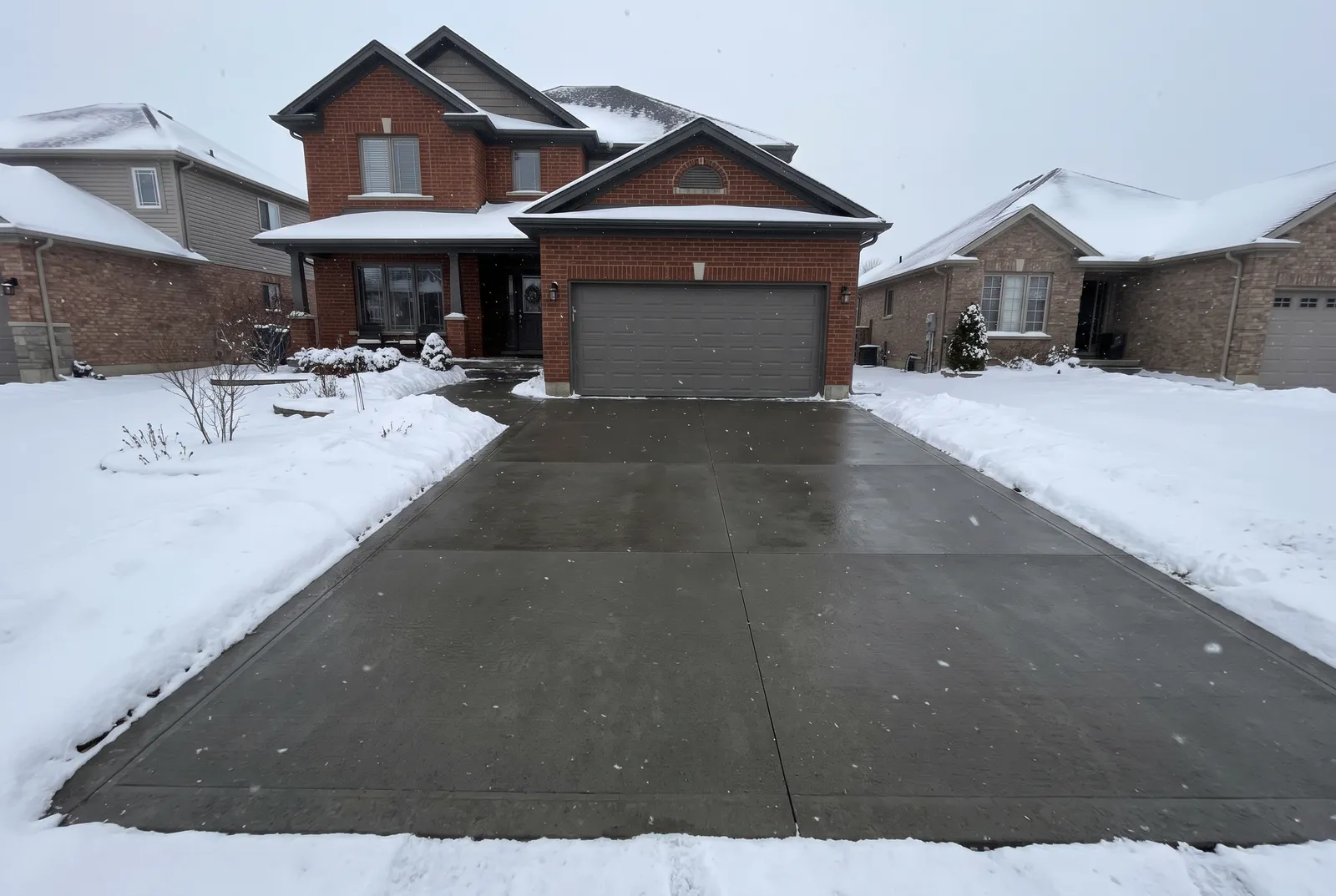
A two-car concrete driveway in front of a red-brick house, bare and damp while light snow falls and the lawn on both sides sits under fresh snow.
Concrete driveway clear and dry while the snow stays on the lawn
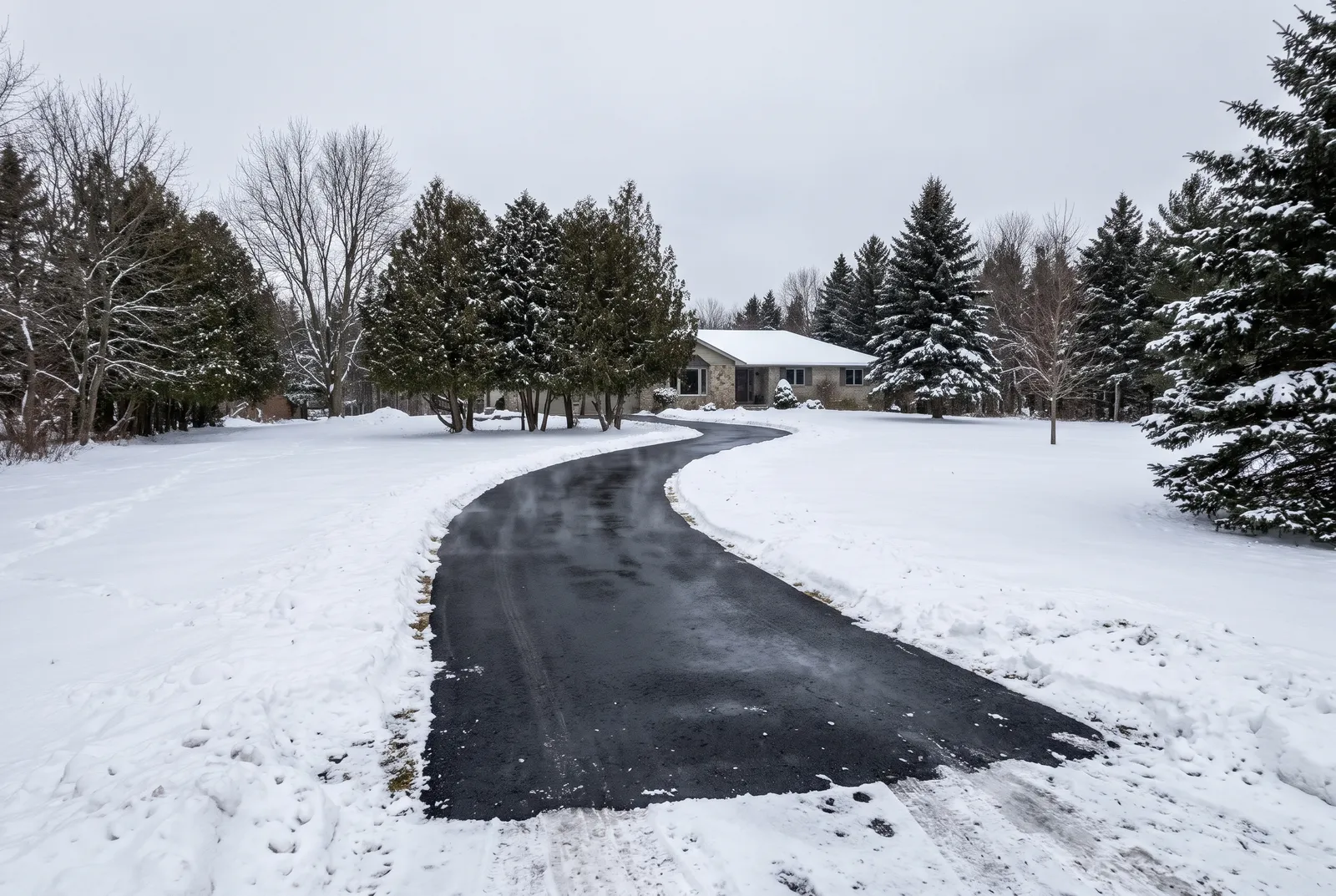
A long curving black asphalt driveway, wet and free of snow, cutting through a snow-covered front yard lined with spruce trees toward a bungalow.
Heated asphalt driveway running clear through a snowy yard
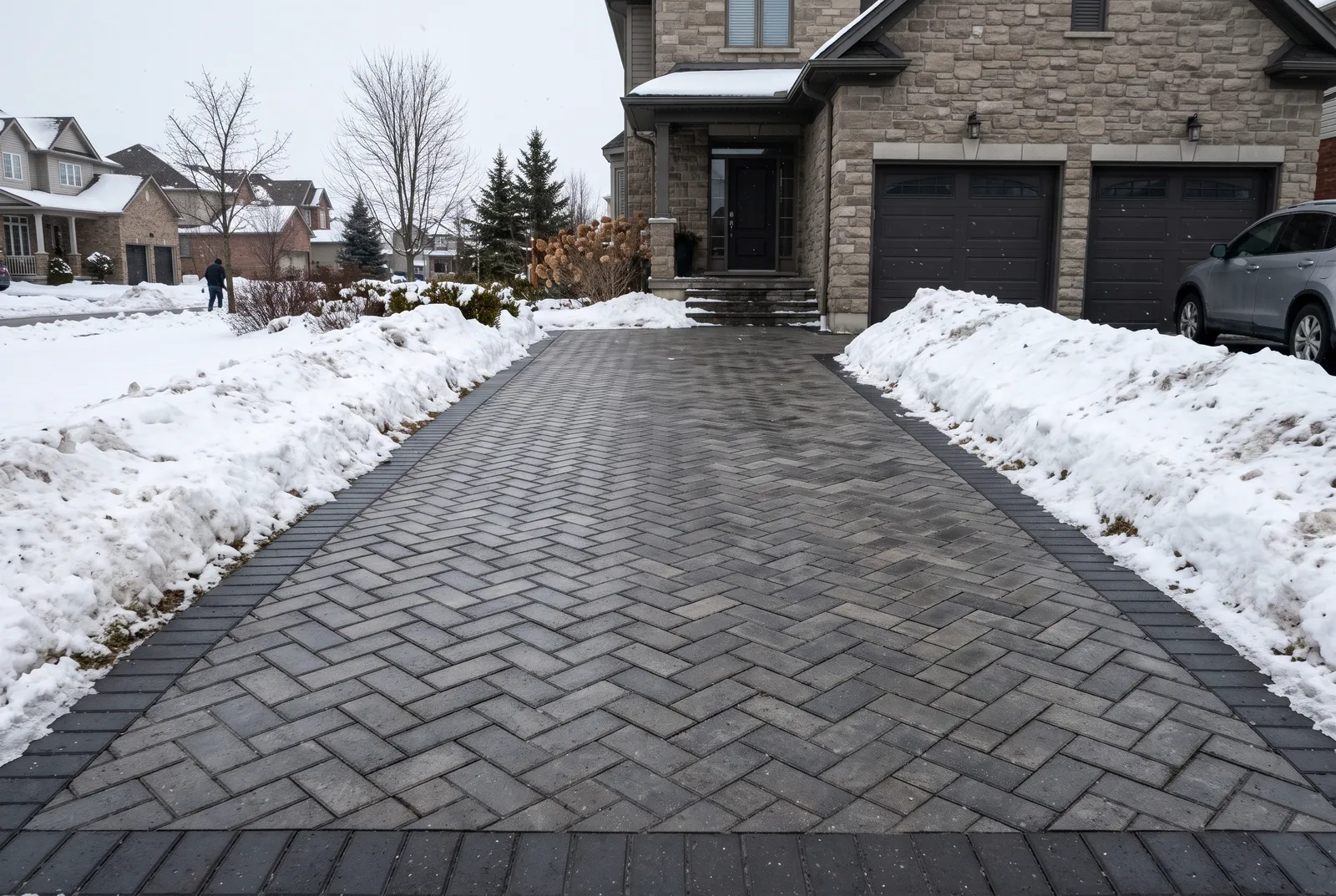
A charcoal herringbone paver driveway with a darker border, completely clear of snow between high snowbanks, leading to a stone house with a double garage.
Herringbone interlock driveway, clear between the snowbanks
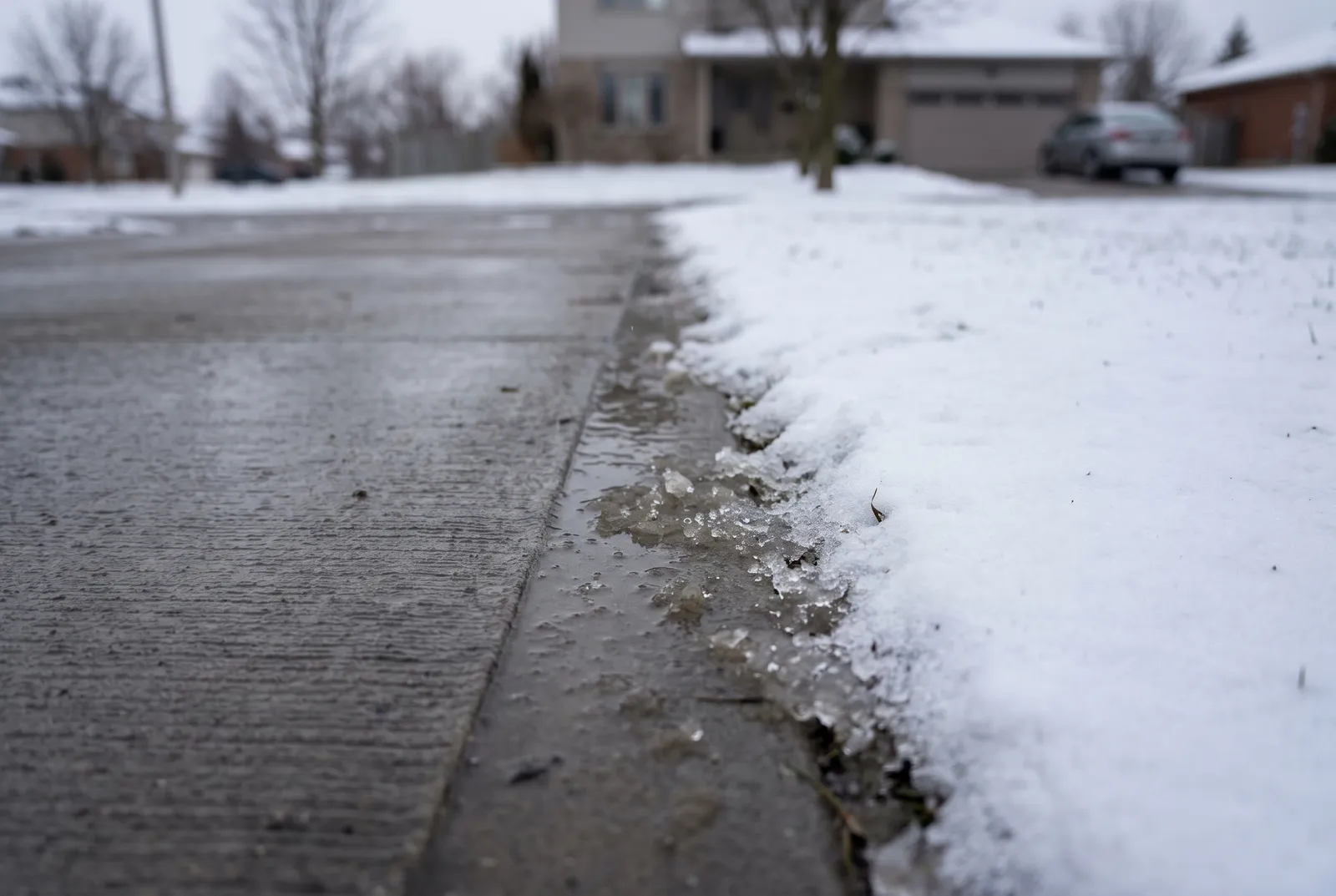
Close-up at ground level of a broom-finished concrete driveway edge: bare damp concrete on one side, a sharp melting line, and untouched snow on the lawn beside it.
Where the heated slab ends and the snow begins
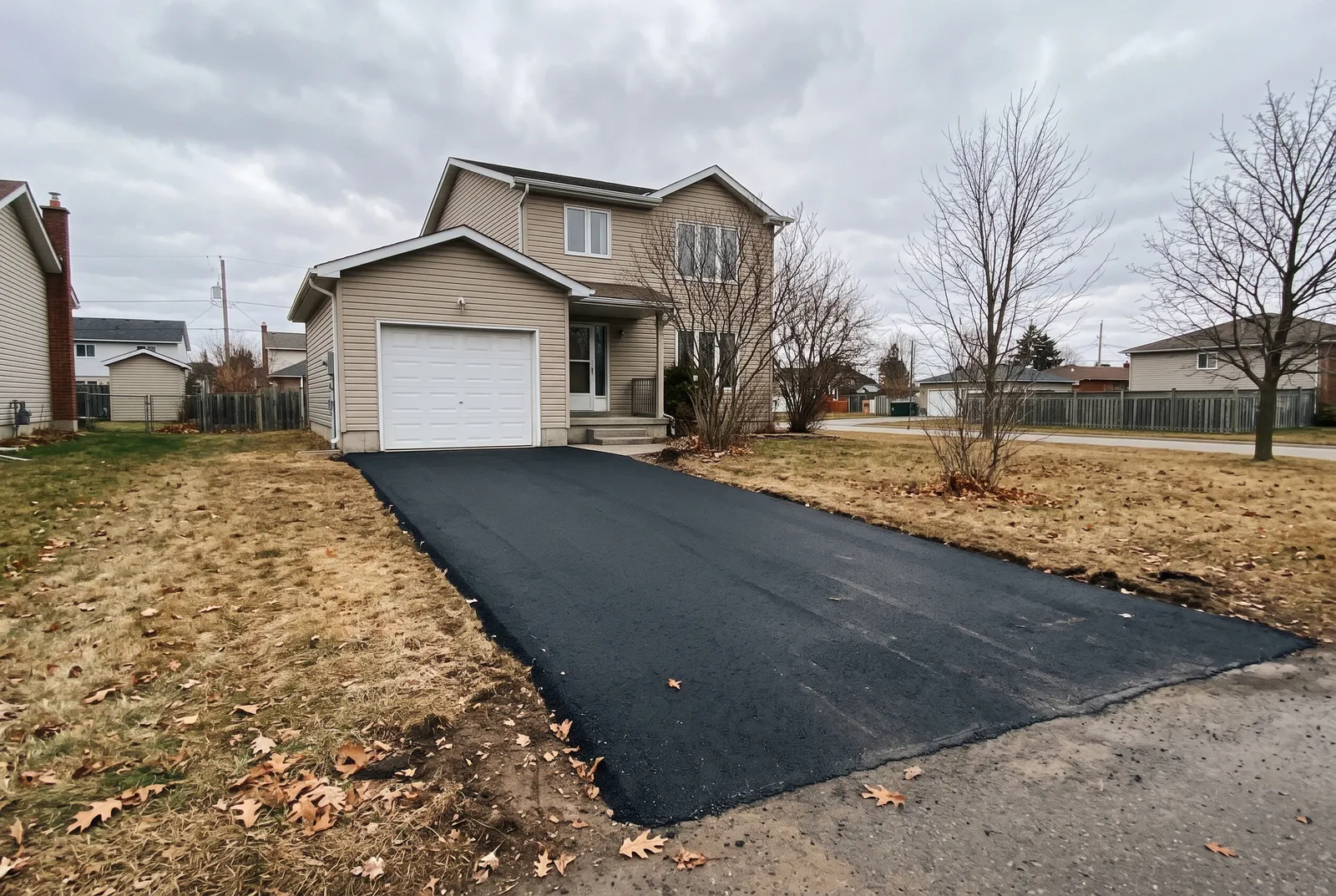
A smooth black asphalt driveway leading to a beige two-storey house with a single garage, with dormant grass and a few fallen leaves along the edges.
Asphalt driveway on a dry late-autumn day
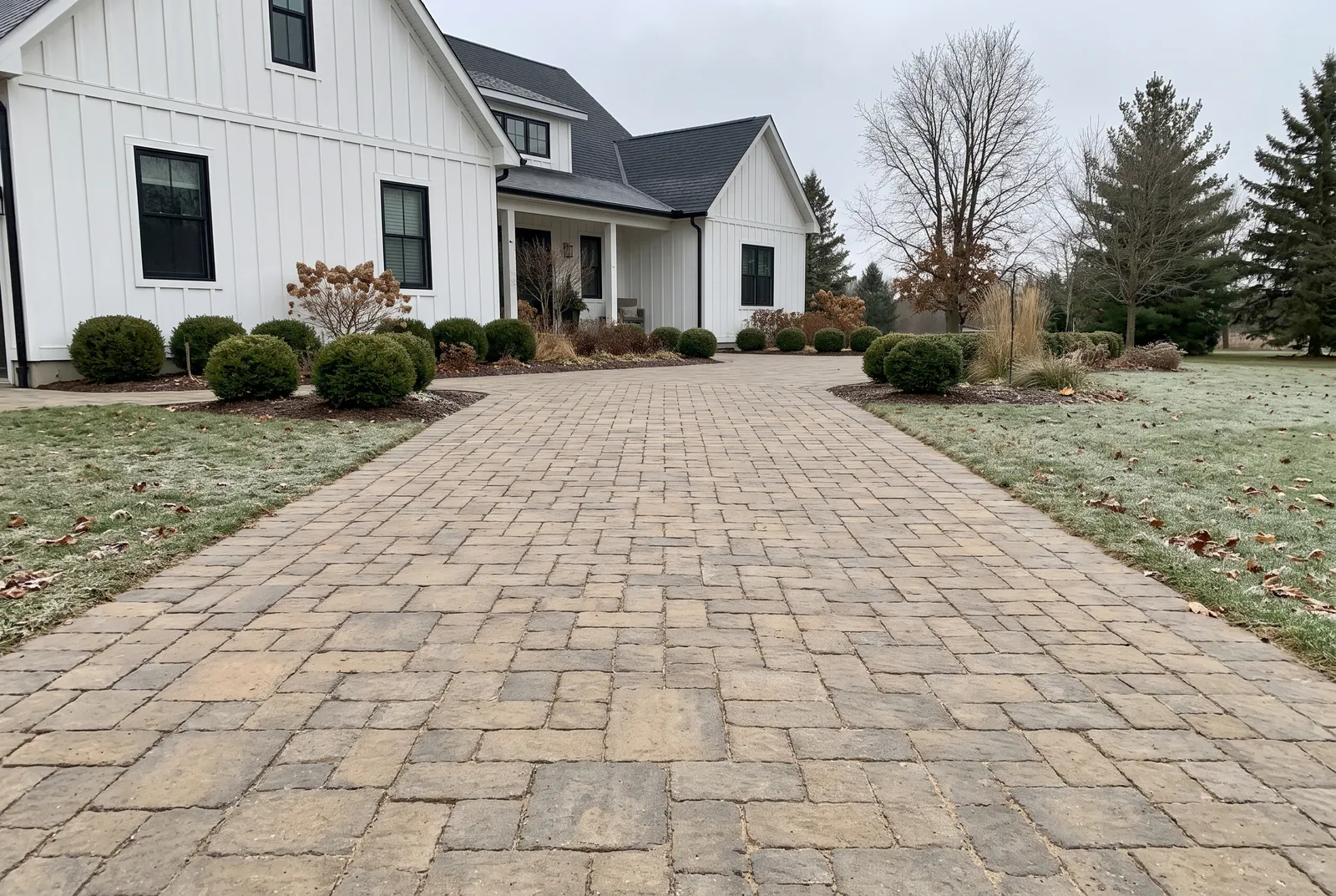
A tan and grey tumbled paver driveway in a random pattern, dry, leading to a white board-and-batten farmhouse past clipped boxwood shrubs and frosted grass.
Tumbled interlock driveway on a dry, frosty morning
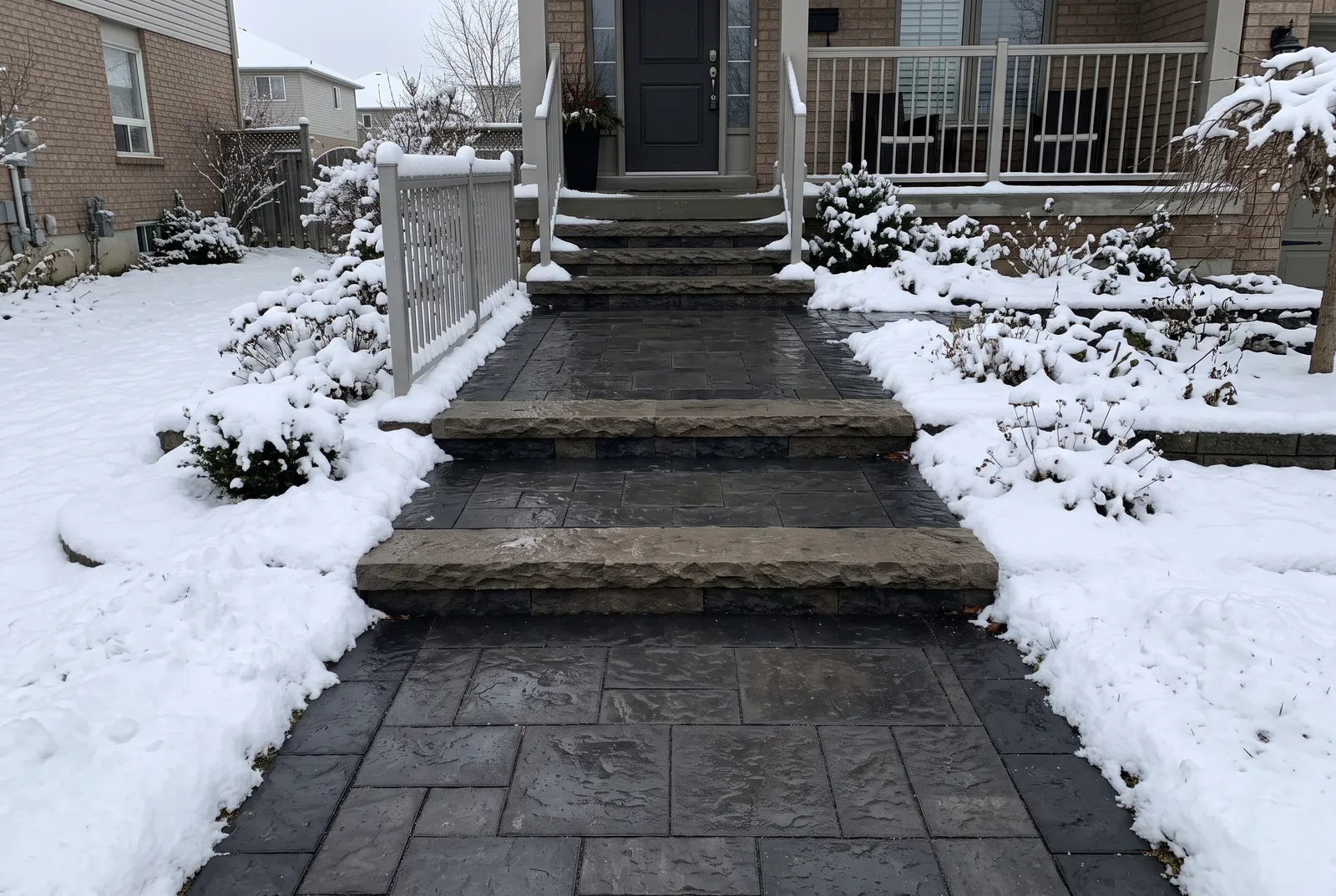
A charcoal paver walkway and stone-capped steps leading to a front door, bare and wet while the garden beds and railings on both sides are heaped with snow.
Heated front walkway and steps, clear after a snowfall
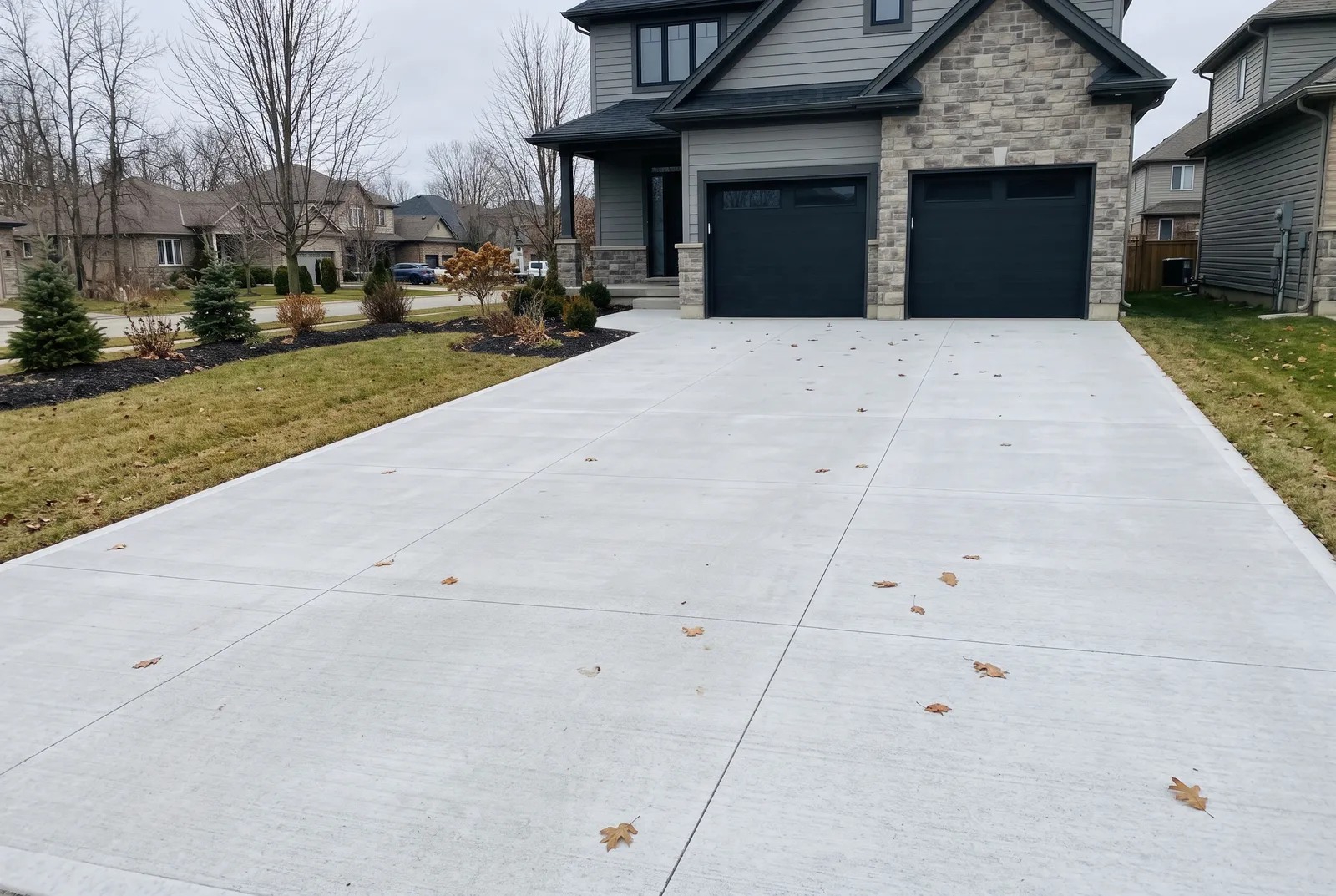
A new light grey concrete driveway with neat control joints in front of a stone and grey-siding house with a double garage, dry, with a few fallen leaves.
Broom-finished concrete driveway with saw-cut joints

Under the surface

The layers that go in before the surface: the base, insulation, tubing on mesh, the pour and the mechanical side.
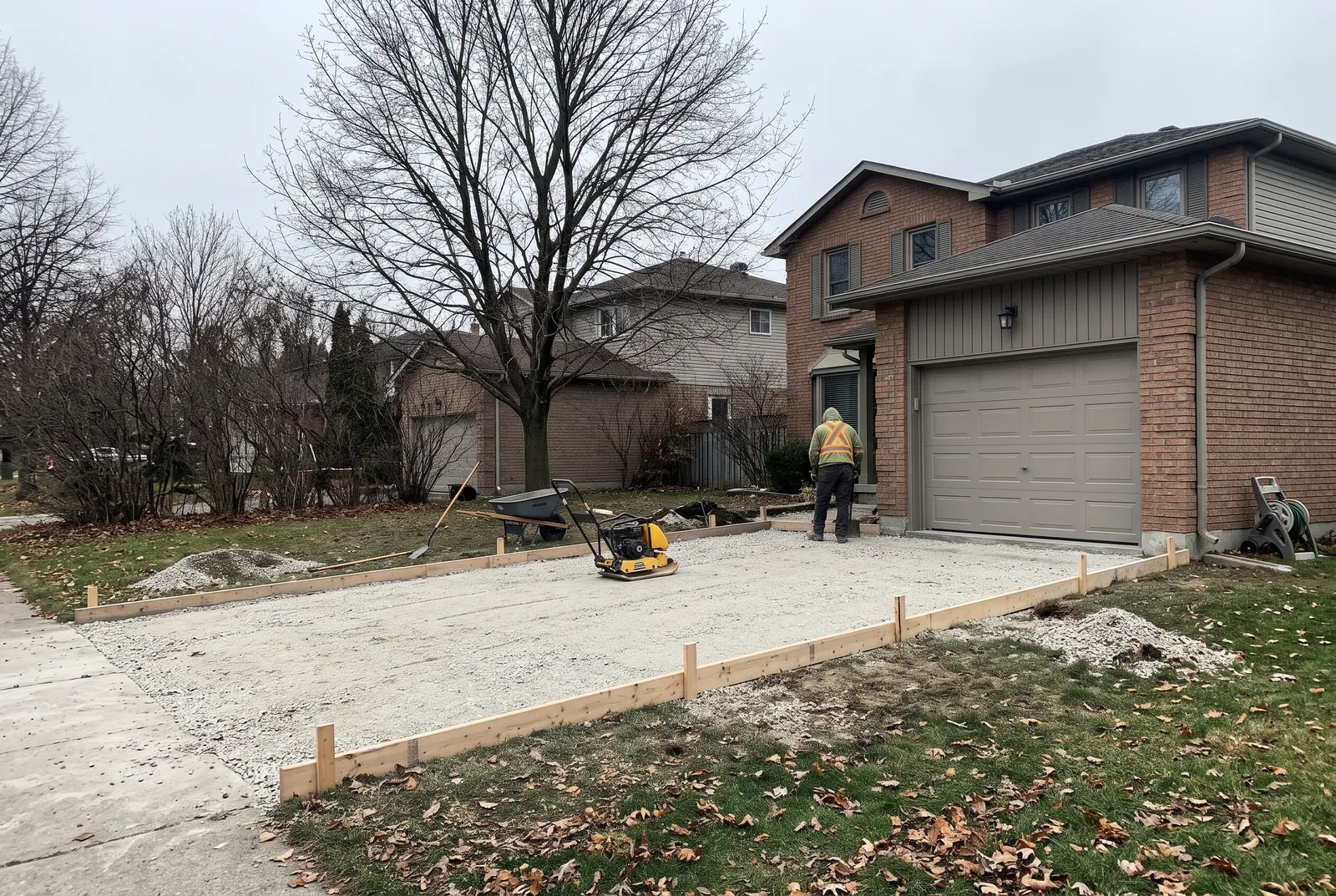
A driveway excavation filled with a compacted crushed-stone base, wooden form boards along the edges and a plate compactor on the gravel, in front of a brick house.
Compacted gravel base with forms set
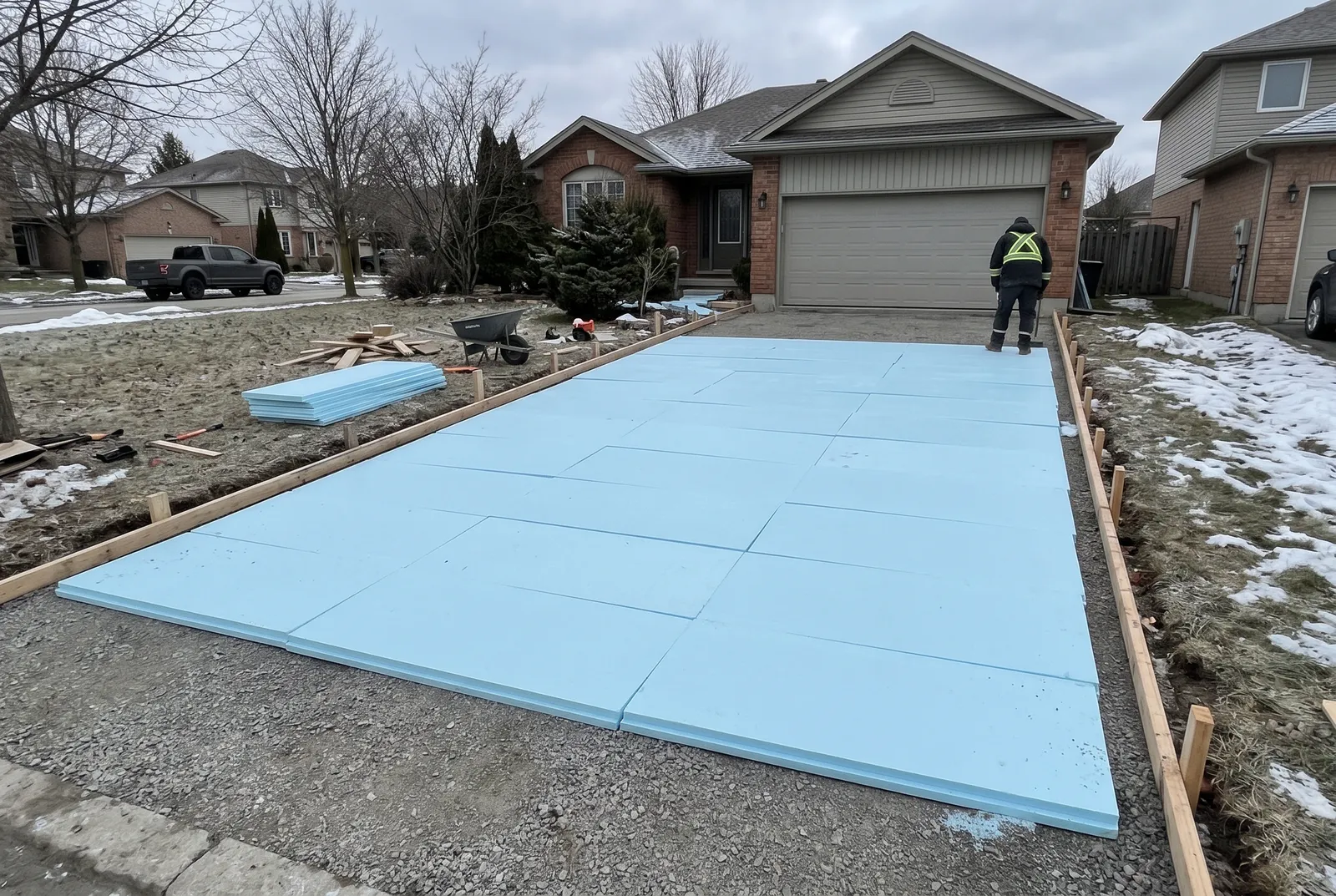
Light blue rigid foam insulation boards laid edge to edge over a compacted gravel driveway base, with wooden forms along the sides and spare boards stacked nearby.
Foam insulation boards laid over the base
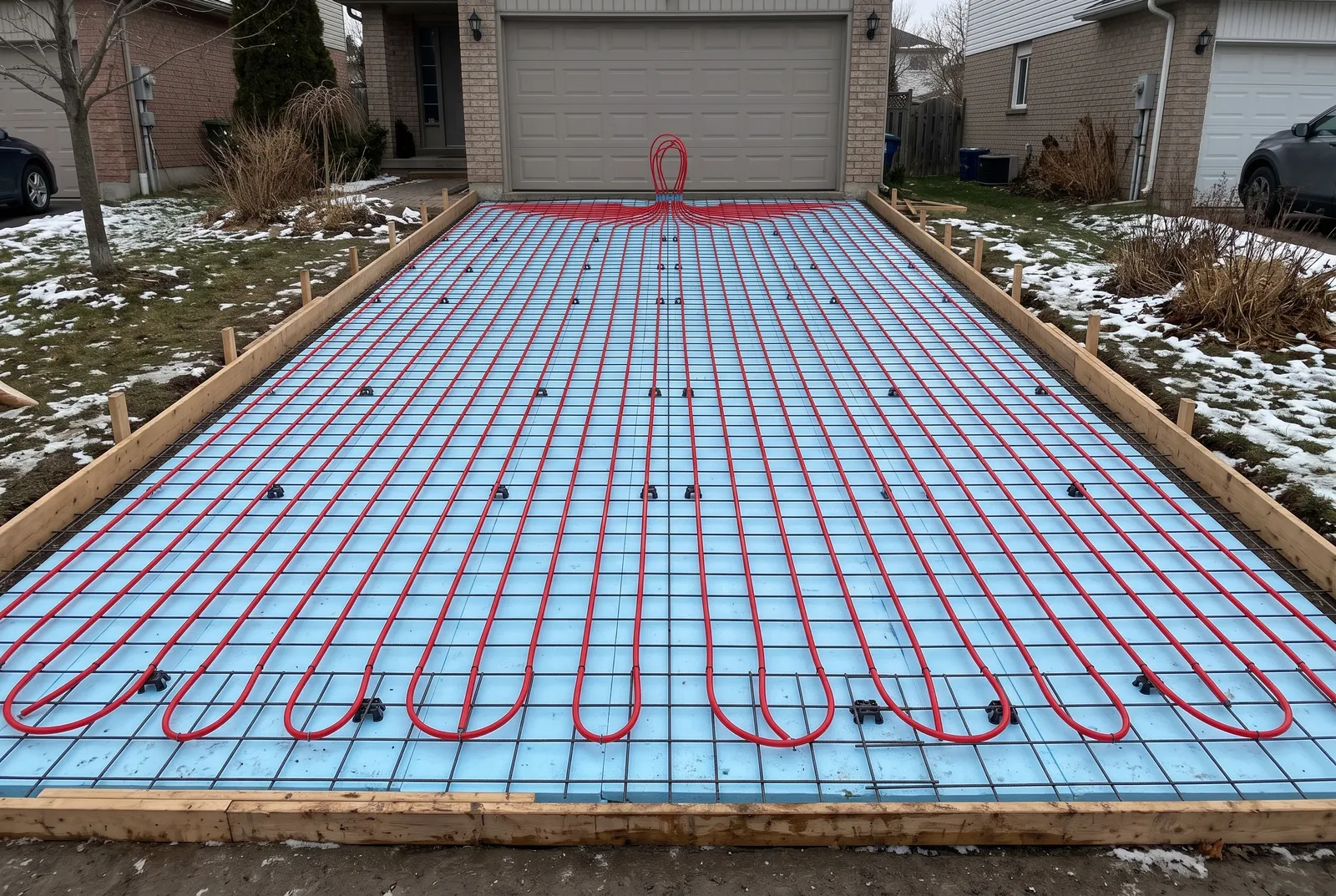
Red PEX heating tubing laid in even parallel loops with U-bends, tied to steel mesh over blue foam insulation across a whole driveway, with the tube ends gathered near the garage.
PEX tubing on reinforcing mesh before the pour
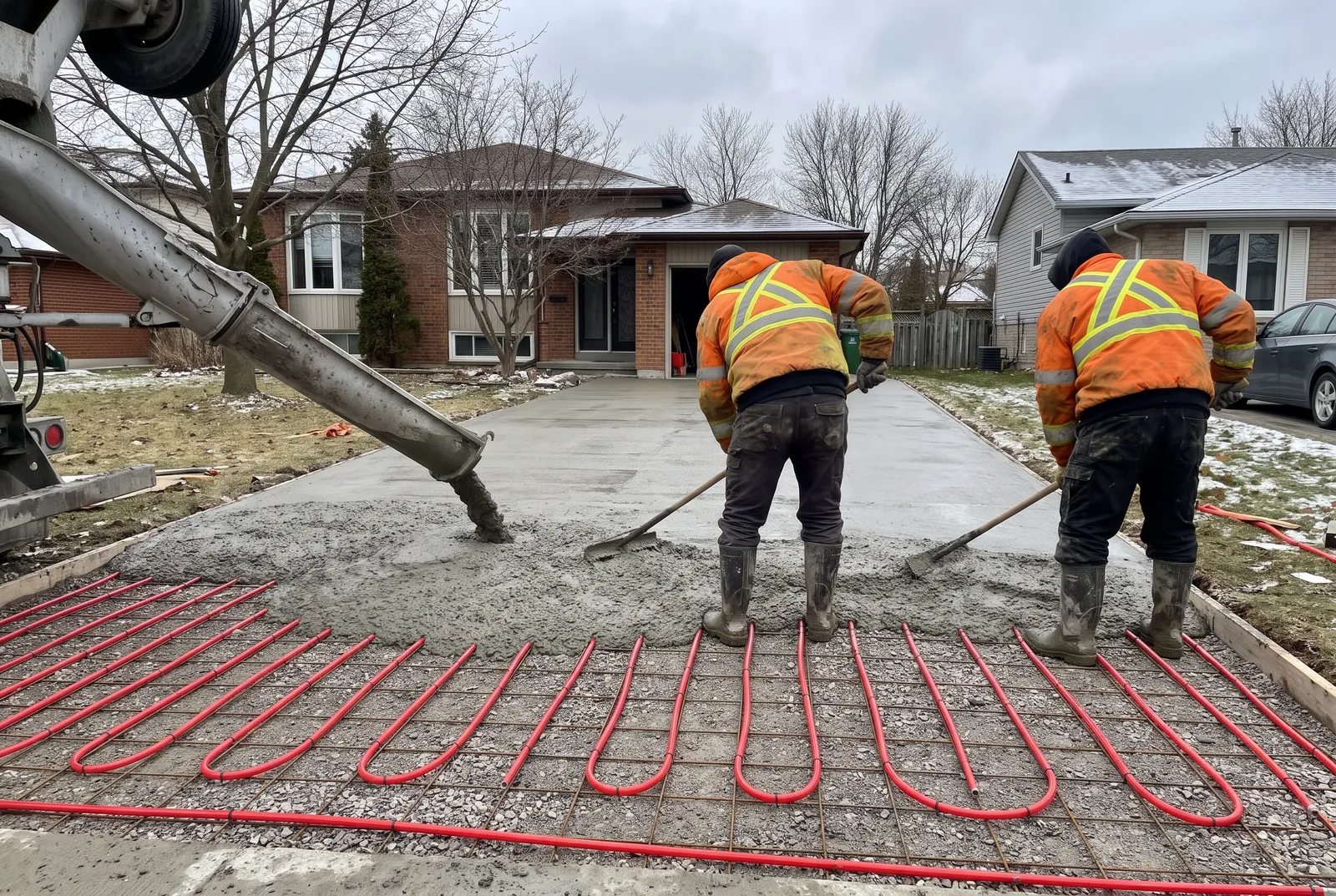
Concrete flowing from a chute onto a driveway while two workers in high-visibility jackets, seen from behind, spread it over red heating tubing laid in loops on mesh.
Concrete going down over the heating tubing
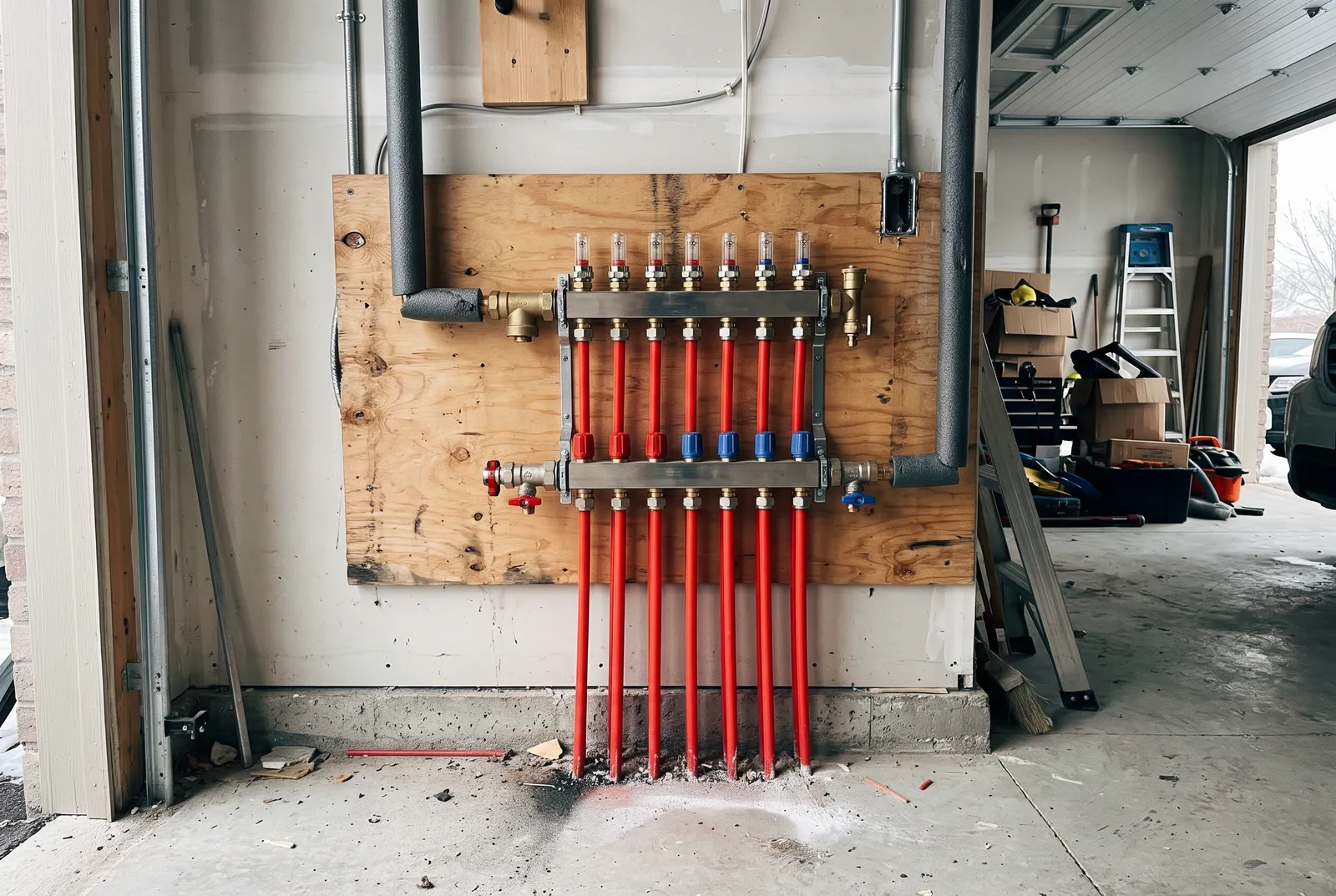
A brass and stainless snow-melt manifold mounted on plywood in a garage, with red PEX tubes rising from the concrete floor into its ports and insulated supply and return pipes leading away.
Supply and return manifold on the garage wall
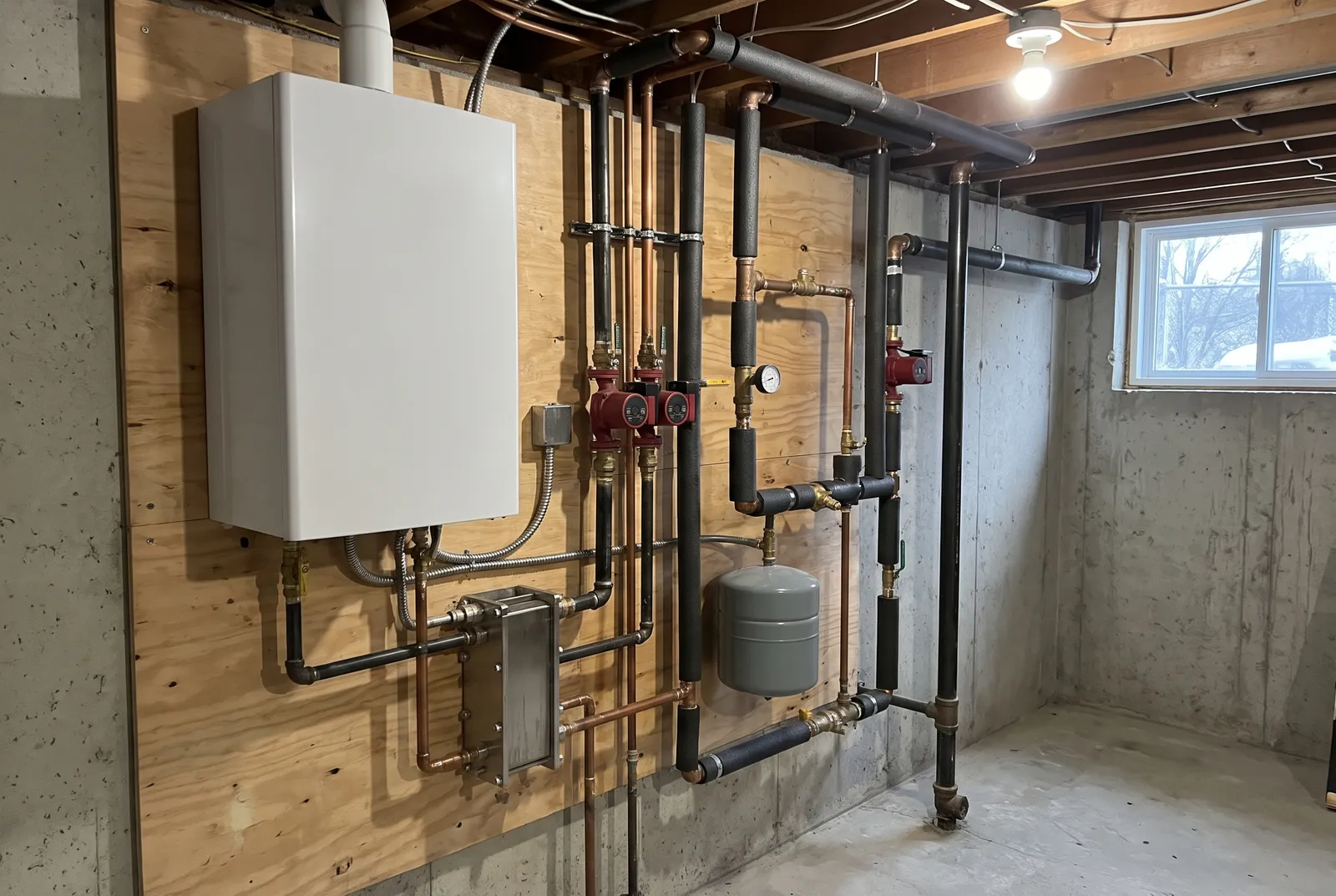
A tidy basement mechanical room with a white wall-hung boiler, a plate heat exchanger, circulator pumps, an expansion tank and insulated piping on a plywood backboard.
Boiler, heat exchanger and pumps for a snow-melt system
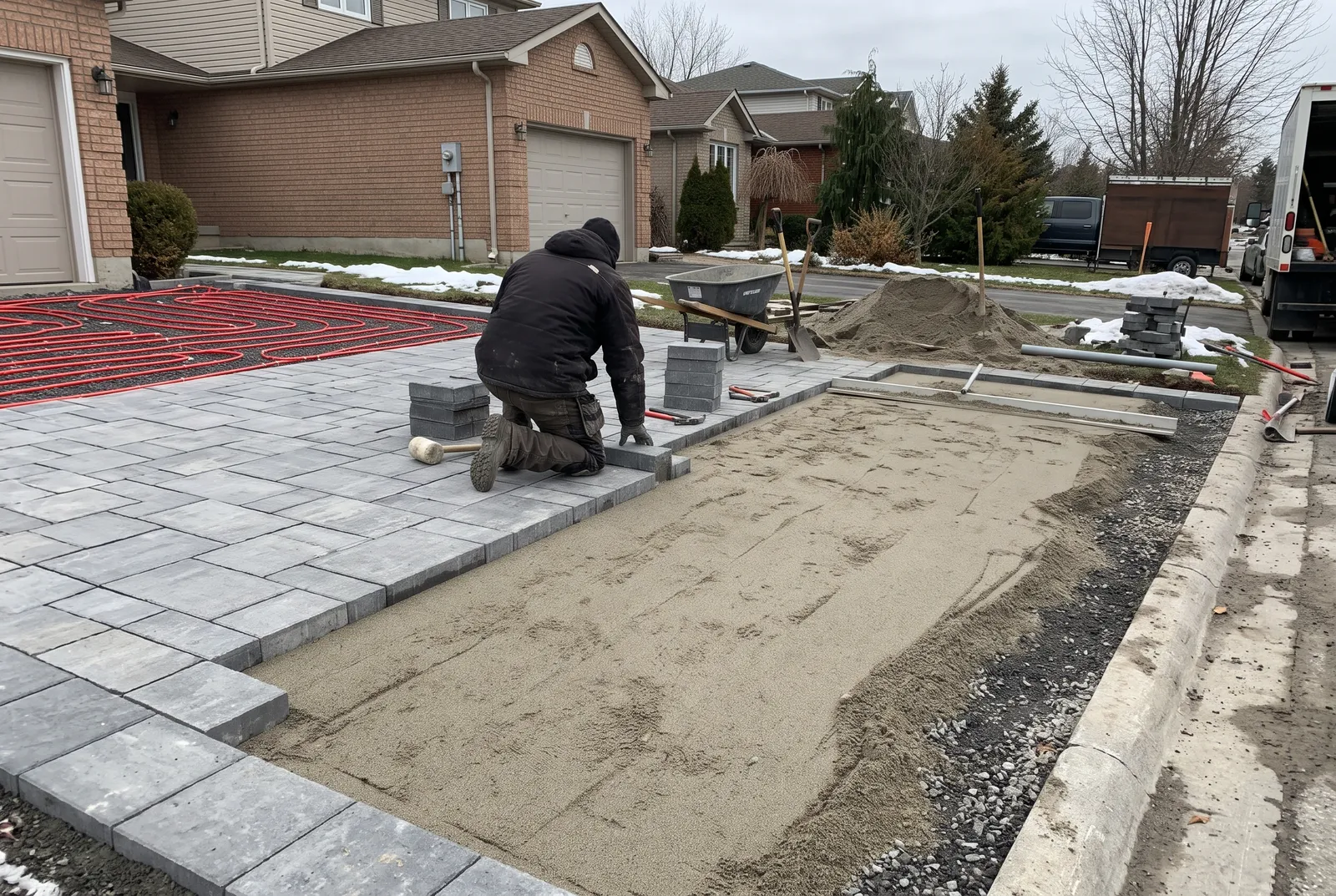
An interlock driveway part way through installation: finished grey pavers, a screeded sand bed, and red heating tubing still visible at the far end, with a worker setting pavers.
Pavers going down over the sand bed and heating tubing
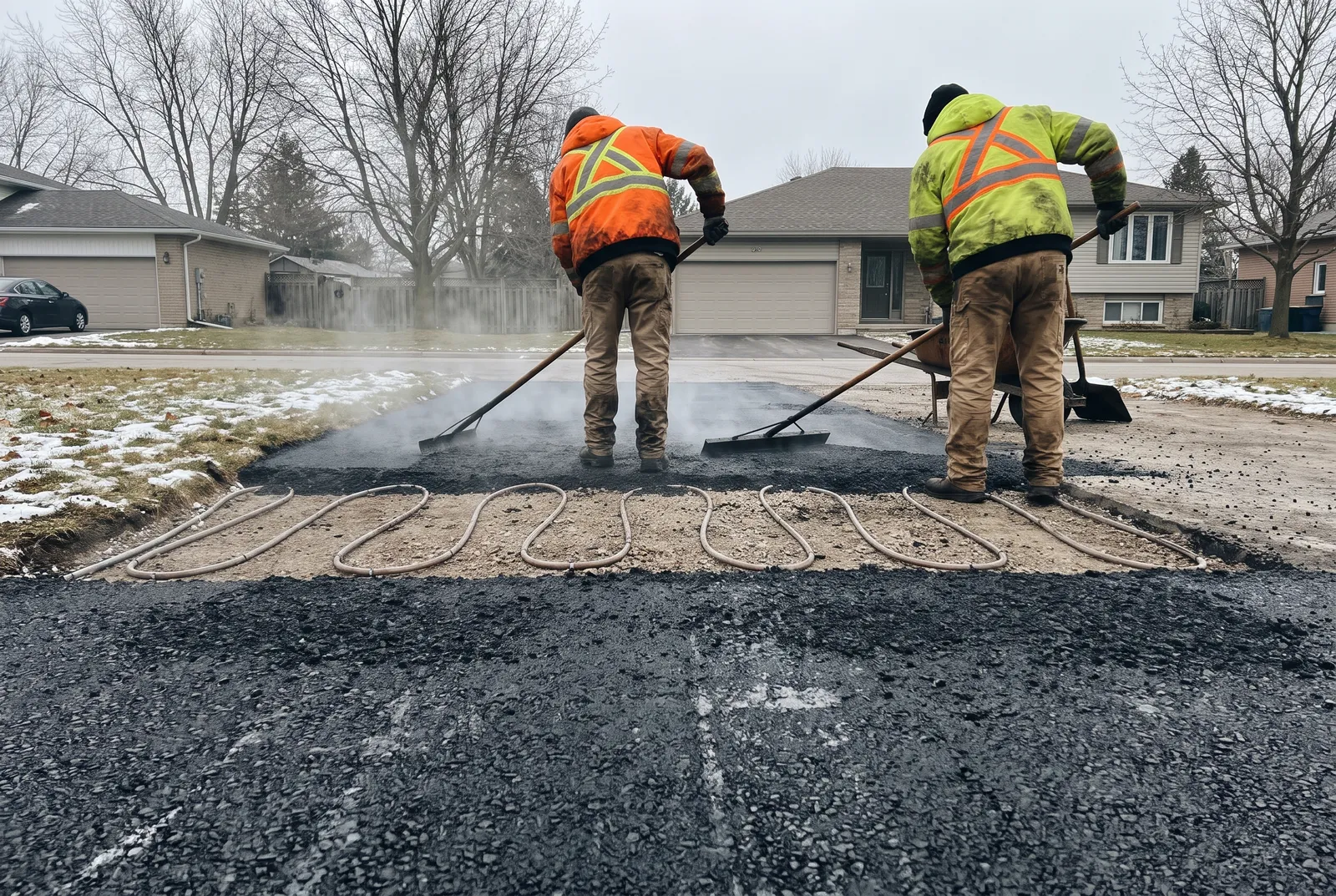
Two workers in high-visibility jackets, seen from behind, raking steaming fresh asphalt over a granular driveway base where heating tubing is still visible ahead of them.
Hot asphalt spread over the heated base

Next step

Start with a conversation about your property.

Most consultations take less than 45 minutes and come with no obligation. Bring rough driveway measurements and the surface you have in mind, and SunFlow takes it from there.